Venezuela, Anybody? Maduro, Drugs, Oil, and the Monroe Doctrine Resurrected
Maduro arrest: the right call—legally, strategically, morally. The foreign policy establishment is melting down because Trump proved everything they believed about American power was wrong. The Monroe Doctrine isn't dead. America has spine again without endless wars.

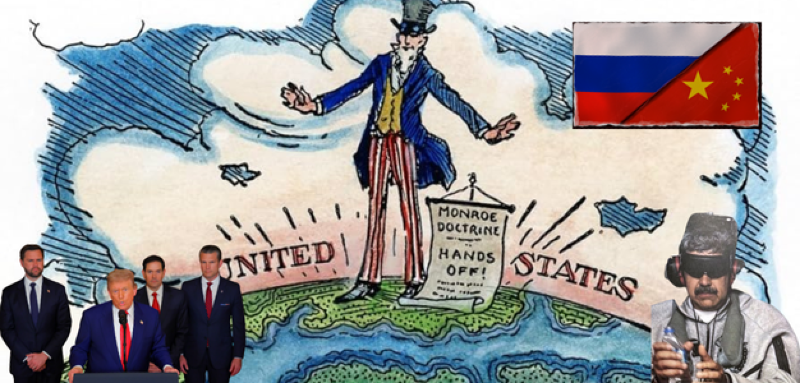
“What would you assume is the most major threat on the world stage? Russia? China? Venezuela, anybody?” - Jack Ryan (Season 2, Episode 1)
Who would have thought John Krasinski aka “Jim” from the office would have nailed this entire Venezuela situation on Tom Clancy’s Jack Ryan?
— Topher (@TopherGotWifi) January 4, 2026
This is a must watch. This is what Trump was watching during his 4 year break between trials to get spooled up.
Wild. pic.twitter.com/WYImCZ3rO6
In the early morning of January 3, President Trump authorized Delta Force to storm Nicolás Maduro’s Caracas safehouse in Operation Absolute Resolve—mere hours after the dictator hosted a high-level Chinese delegation sealing deepened alliance talks. The surgical raid—over 150 aircraft, precision air strikes shredding air defenses—slipped past Chinese JYL-1, JY-11B, JY-27 radars and Russia’s touted S-300VM "impenetrable umbrella"; one U.S. helo grazed but no American injuries, zero civilian casualties, Maduros and key aides bagged and exfiltrated by 3:29am on USS Iwo Jima—mission clocked under 3 hours flawless. That Jack Ryan episode foreshadowing the stakes: Venezuela’s 303 billion barrels of oil and other natural resources, stranded in a failed state with 75% starving (losing 17lbs+ on average), 8 million refugees fleeing, Russia/China backing a narco-tyrant 30 minutes flight time from Florida.
The admin powerfully announcing what they have called the “Trump Corollary” to the Monroe Doctrine—barring foreign powers from our hemisphere, now executed through the administration’s coordinated national security strategy: neutralize narco-terror threats, secure vital resources, and constrain adversary influence.
Everyone paying attention yet? The world just changed course.
Maduro: Bus Driver to Narco-Terror Boss
Nicolás Maduro began as a bus driver and union organizer in 1980s-90s Caracas, forging ties to Cuban intelligence through leftist activism. He caught Hugo Chávez's eye post-1992 coup attempt, entering politics as National Assembly legislator, rising to Assembly president, foreign minister—where he deepened Venezuela-FARC narco-links—and vice president. Chávez named him successor on his March 2013 deathbed amid cancer; Maduro won April's disputed election 50.6-49.1%, leveraging oil windfalls and state machinery.
As president, Maduro consolidated Cartel de los Soles ("Suns Cartel," from military insignia)—a military-led network smuggling 200+ tons of cocaine yearly with Colombia's FARC, using official Venezuelan planes/ships. In March 2020, U.S. prosecutors indicted him as top boss, alongside wife Cilia Flores and general Diosdado Cabello, overseeing routes to Mexico cartels and U.S. via Honduras. The superseding indictment details $1B+ bribes for FARC protection, branding regime a "narco-terrorist organization"—no immunity in U.S. courts.
Venezuela devolved: hyperinflation millions percent, chronic blackouts, seized industries. Deliberate rations starved 75% (17lbs+ average loss), empowering cartels over desperate citizens.
Fraud and Famine: 2024's Ugly Truth
Venezuela 2024, a presidential election exposed Maduro's grip: Opposition leader Edmundo González Urrutia dominated with 67% to Maduro's 30% across 80%+ of precinct tally sheets collected by volunteers—82% turnout demanded change. Yet Maduro's National Electoral Council (CNE), packed with loyalists, declared him winner at 51.2% to 48.8%—without releasing disaggregated data, citing a "cyberattack."
Urrutia and allies, however, published full tallies online, verified by independents like Carter Center; U.S., EU, most Latin America rejected results, recognizing González. Maduro responded with mass arrests (2,000+), internet blackouts, and lethal force—killing 24 protesters in days.
This fraud capped Maduro's famine machine: socialist price controls capped food at pre-hyperinflation levels, crashing production; oil mismanagement (PDVSA output halved) starved imports; rations via "CLAP boxes" favored loyalists, corrupt and insufficient. Result: 75% malnutrition (17lbs+ average loss 2017-19), child mortality tripled, GDP shrunk 75% since 2013—worse than Great Depression, all while Cartel de los Soles laundered billions.
AUMF Outrage - The Legal Foundation
Under U.S. law, the Core Legal Arguments are straightforward:
Executive Branch Recognition Controls Immunity: Under U.S. law, "a head-of-state recognized by the United States government is absolutely immune from personal jurisdiction in United States courts unless that immunity has been waived." Immunity is a privilege granted by the executive branch, not by the courts. Critical point: Since 2019, the U.S. government—along with more than 50 other countries—does not recognize Maduro as the legitimate head of state. What Russia, China, and Cuba think "counts for zero in U.S. court system."
The Noriega precedent established that "the United States government never recognized Noriega as Panama's legitimate ruler" and U.S. courts rejected his head-of-state immunity claim on this basis.
The 1989 Barr Memo - Executive Authority to Arrest Abroad: A 1989 memo by William Barr concluded that the president has "inherent constitutional authority" to order the FBI to take people into custody in foreign countries, even if it violated international law. This memo specifically authorized: (1) extraterritorial FBI arrests, (2) arrests in violation of foreign law that don't violate the Fourth Amendment, (3) presidential authority to override international law in law enforcement actions, and (4) delegation of these powers to the Attorney General.
The Trump administration's legal theory: Secretary of State Rubio represented that the arrest of Maduro for violating U.S. law was the primary justification, calling it "at its core, an arrest of two indicted fugitives of American justice, and the Department of War supported the Department of Justice in that job."
The Narco-Terrorism Classification: Since 2019, the US Department of Justice has classified Maduro not as a President, but as a private citizen leading a "Narco-Terrorist organisation." Therefore, he holds no diplomatic immunity in US eyes. Maduro was indicted in 2020 on narco-terrorism conspiracy charges. The new argument: Head of state immunity only applies when a ruler is exercising duties in the interests of his countrymen, not "when the ruler is acting illegally in his own self-interest for personal financial gain, such as international money laundering."
Even the Biden-Harris administration made available a $25 million reward for information leading to Maduro's arrest— the second-highest reward in State Department history and the clearest possible acknowledgment that the United States government, regardless of party, viewed him as a fugitive criminal rather than a legitimate head of state. The previous administration recognized what Operation Absolute Resolve enforced: Maduro was not a president deserving diplomatic immunity but a drug trafficker deserving a jail cell.
Just listen to Senator Chris Murphy (D-CT) in 2024:
Everyone take a moment and listen to Chris Murphy in 2024 explain how the illegitimate Maduro remaining in power causes a crisis at our border. pic.twitter.com/8PYMmB1eMw
— MAZE (@mazemoore) January 4, 2026
The Ker-Frisbie Doctrine: US Courts ruled in United States v. Noriega that "jurisdiction is not defeated by abduction," establishing the legal rule that if the US military can physically drag you into a courtroom, you can be tried. This means: Even if the method of capture was illegal, it doesn't defeat the court's jurisdiction to try him.
Constitutional War Powers: The President's Authority
Democrats like Schumer, Jeffries, Kaine, and Smith reacted sharply post-raid, condemning the action as "unauthorized" and calling for AUMF consultations, expressing fears of broader conflict or resource grabs—despite notifications provided to congressional leadership afterward. The concern holds merit: the War Powers Resolution requires 48-hour reporting and limits operations to 60 days absent approval.
However, this selective criticism overlooks precedent: Obama circumvented Congress in Libya 2011 (no authorization, regime change effort, Benghazi casualties); conducted drone campaigns in Yemen, Somalia, and Pakistan with civilian losses outside clear AUMF scope; Bush and Obama invoked 2001/2002 AUMFs for protracted Iraq and Afghanistan engagements diverging from their original intent.
Operation Absolute Resolve rests on firm constitutional ground. Legal scholars recognize no bright-line definition of "war" requiring congressional approval—the president needs latitude for limited actions achieving geopolitical objectives, subject to electoral validation by the voting base that elected him. Justice Joseph Story wrote: "It may be fit and proper for the government to act on a sudden emergency, or to prevent an irreparable mischief, by summary measures, which are not found in the text of the laws."
Presidents claim this authority for critical reasons:
- Speed: Modern threats move faster than 18th-century conflicts
- Operational Security: Congressional debates alert adversaries
- Tactical Flexibility: Deterrence requires credible immediate response capability
- Protection of Forces: Once deployed, commanders must defend troops
Since 2019, the U.S. and over 50 nations regard Maduro as a private narco-terrorist figure, not a head of state—DOJ designation confirms this. No AUMF required for law enforcement operations against indicted criminals.
The Venezuelan People's Response
Venezuelans celebrated widely: Caracas streets brimmed with flags and fireworks, "cacerolazo" pot-banging protests; Miami and Colombian exile communities (8 million total refugees) rejoiced; even some regime elements publicly defected—marking a long-overdue dawn of hope.
Celebrations in Venezuela!🇻🇪❤️🙌🏻
— Monica (@MonBreeden) January 3, 2026
🎉🥳You can feel the relief and joy! pic.twitter.com/1grkspDYab
The Monroe Doctrine Returns—With Teeth
The Trump administration's framing as a "Trump Corollary" to the Monroe Doctrine isn't rhetorical flourish—it's strategic doctrine resurrected for the 21st century. The 1823 Monroe Doctrine, articulated by President James Monroe and Secretary of State John Quincy Adams, established a clear principle: European powers attempting to colonize or interfere in the Americas would face U.S. opposition, while America would stay out of European conflicts. The doctrine declared that "the American continents, by the free and independent condition which they have assumed and maintain, are henceforth not to be considered as subjects for future colonization by any European powers."
For decades, this doctrine shaped hemispheric policy—from blocking European intervention in Latin American independence movements to confronting Soviet missiles in Cuba during the 1962 crisis. It fell into disuse as "imperialism" critiques mounted and U.S. foreign policy shifted toward global multilateralism. But Venezuela's collapse exposed the cost of neglect: Russia and China filled the vacuum, treating our hemisphere as contested ground.
Secretary of State Marco Rubio and Secretary of War Pete Hegseth have explicitly revived Monroe's framework with modern application. In an interview with Sean Hannity, Rubio declared that "America First starts in our own hemisphere"—a direct invocation of Monroe Doctrine principles applied to 21st-century threats. Hegseth reinforced this strategic shift hours after the capture of Maduro, stating to CBS News that the United States can help both the people of Venezuela and America in the Western Hemisphere by "reestablishing the Monroe Doctrine — which established the tenets of U.S. foreign policy — with peace through strength with our allies." He added: "I think the hemisphere, I know the hemisphere will benefit from President Trump's bold action."
The doctrine's resurrection isn't about territorial expansion—it's about denying adversaries strategic leverage. Venezuela under Maduro became exactly what Monroe feared: a beachhead for hostile powers projecting influence and threat toward the United States.
Cutting the Lifeline: Russia and China's Venezuelan Gambit Collapses
Maduro's capture deals a devastating blow to Russian and Chinese strategy. Since 2006, China loaned Venezuela over $50 billion—one-third of the $150 billion China Development Bank deployed across Latin America—securing oil-for-loan repayment agreements that guaranteed discounted Venezuelan crude regardless of market prices. These loans came with strings: Venezuela shipped oil to China at below-market rates while Beijing gained access to PDVSA joint ventures and infrastructure projects.
Russia similarly propped Maduro through arms sales (over $11 billion since 2005), military advisors, and diplomatic cover at the UN Security Council, while state oil company Rosneft partnered with PDVSA to access reserves and circumvent Western sanctions. Russia's strategic goal: maintain a Western Hemisphere ally capable of hosting military assets and challenging U.S. regional dominance.
Both powers sought the same prize: energy independence from Western-controlled supply chains and financial systems. Venezuela's 303 billion barrels represented a hedge against sanctions, a cash cow outside SWIFT, and a Western Hemisphere foothold. Maduro's regime functioned as a client state—shipping oil east while Beijing and Moscow blocked international pressure.
Operation Absolute Resolve severs that artery. Without Maduro, Russia and China lose:
Oil Access: Venezuela's production increased to 1.13 million barrels per day by October 2025, up from its record low of 392,000 barrels per day in July 2020, but still far below its 1997 peak of 3.45 million barrels per day. Under transitional governance aligned with democratic forces, production will likely stabilize and expand—but flowing to Western markets and partners, not authoritarian regimes. China's oil-for-loan leverage evaporates overnight; Russia loses its only significant Latin American energy partner.
Sanctions Evasion: Both nations used Venezuela to launder money, evade sanctions, and access hard currency outside dollar-dominated systems. PDVSA served as a conduit for Russian oil blending operations and Chinese commodity financing schemes that masked sanctioned transactions. A reformed Venezuela cooperating with U.S. Treasury and financial authorities ends those schemes permanently.
Strategic Positioning: Military cooperation collapses—Russian military presence in Venezuela is decimated. Venezuela's air defense network included 1-2 divisions of S-300VM systems, 3-9 Buk-M2E systems, and over 6 S-125 Pechora-2M units—all Russian-designed—alongside 21 Su-30MKV Russian fighters. Russia supplied additional air defense systems through 2024 and fall 2025, including Buk-M2 and Pantsir units. Operation Absolute Resolve destroyed these Russian-supplied systems, including Buk-M2E batteries at La Carlota airbase. No more Russian bombers staging through Venezuela, no Chinese signals intelligence stations, no joint naval exercises with Russian warships in the Caribbean. The 2019 deployment of Russian troops represented Moscow's most aggressive hemispheric move since Cuba—now reversed and destroyed.
The Cascade Effect: Weakening China on Taiwan, Leverage on Ukraine
China's loss extends far beyond Venezuelan oil revenues. Beijing's Belt and Road strategy relies on economic coercion—lending to create dependency, then extracting geopolitical concessions. Venezuela was a showcase: massive loans, strategic resource access, a foothold against the U.S. in its own backyard. Losing Venezuela signals to other Belt and Road nations from Africa to Southeast Asia that Chinese backing cannot save collapsed regimes from consequences when they cross fundamental U.S. interests.
More critically, Venezuela's oil underwrote China's energy security calculations for potential Taiwan contingency scenarios. The CCP has long sought to diversify oil imports beyond the vulnerable Strait of Malacca chokepoint, where U.S. Navy dominance could strangle Chinese energy supplies in any Pacific conflict. Taiwan's critical vulnerability is energy—the island imports 98% of its energy, relying almost entirely on imported oil and liquefied natural gas with only weeks of LNG storage, making energy supply chains a strategic chokepoint that CSIS wargaming demonstrated could cripple Taiwan's resistance. Venezuelan crude—shipped across the Pacific outside potential U.S. interdiction zones—offered a Western Hemisphere alternative immune to South China Sea chokepoints. That option just disappeared.
China now faces starker math on Taiwan: reduced energy redundancy, demonstrated U.S. willingness to project decisive force in its own hemisphere (implying far greater resolve in defending treaty allies in the Pacific), and economic strain from losing Venezuelan revenue streams and defaulted loans. Beijing's military modernization and Taiwan invasion preparations assumed certain strategic assets would remain available—Venezuela is no longer one of them.
For Russia, the squeeze tightens on Ukraine from multiple directions. Moscow leveraged Venezuelan oil revenue to sustain its war machine and sanctions evasion networks. Rosneft's Venezuelan operations provided hard currency and sanctions-busting mechanisms critical to funding the Ukraine invasion. That lifeline is cut.
Simultaneously, the Iran situation compounds pressure: Iranian Supreme Leader Khamenei's regime faces intensifying domestic unrest. Exiled Crown Prince Reza Pahlavi declared on January 1, 2026 that "the current regime has reached the end of the road," as protests escalated following the currency collapse and turned fatal with several deaths reported. Pro-democracy factions and supporters of the Shah's family are gaining momentum among Iranian youth movements and the diaspora. If Iran's mullahs fall to a pro-American government—a scenario looking increasingly plausible as protests over economic collapse and regime brutality intensify—Russia loses another key oil partner, its primary Middle East ally, and its supply route for drones used against Ukraine.
The combined effect creates a strategic vise: Russia bleeds economically from multiple fronts (Venezuela lost, Iran potentially flipping, Western sanctions tightening, oil revenues constrained) just as Ukraine aid flows continue and Western resolve holds firm. China confronts energy vulnerability, regional setbacks across Latin America and the Middle East, and demonstrated limits to its ability to protect client states. Neither power can escalate toward World War III from a position of strength—they're suddenly playing defense on multiple boards simultaneously while their strategic depth shrinks.
Why This Strengthens American Security
Operation Absolute Resolve represents a return to strategic clarity: identifying threats in our hemisphere, acting decisively to eliminate them, and reshaping geopolitical terrain to American advantage. The benefits compound across multiple dimensions:
Energy Security: Venezuelan oil production under democratic governance flows to Western markets, stabilizing global supply and undercutting petro-dictatorships. The country's industry has been devastated—production collapsed from 3.2 million barrels per day in 2000 to just 735,000 bpd by September 2023 under Maduro's corrupt mismanagement. But Wood Mackenzie analysts project that operational improvements and modest investment under competent democratic governance could return Venezuela to mid-2010s production levels of approximately 2 million bpd within one to two years. Beyond that, sustained investment of $15-20 billion over the next decade could add another 500,000 bpd from the Orinoco Belt heavy oil region. With an estimated 300 billion barrels in oil reserves, Venezuela represents massive untapped potential. U.S. energy dominance—already achieved through the shale revolution—gains a hemispheric partner rather than a hostile spoiler working to prop up OPEC pricing and undermine American producers.
Refugee Crisis Resolution: Eight million Venezuelans fled Maduro's famine and terror—a refugee crisis comparable in scale to Syria—straining Colombia, Brazil, Ecuador, Peru, and ultimately the U.S. southern border. A stable Venezuela under legitimate governance allows voluntary returns, reduces migration pressure throughout the hemisphere, and removes a primary driver of regional instability that threatened to destabilize multiple Latin American democracies.
Narco-Trafficking Disruption: The Treasury Department designated Cartel de los Soles as a Specially Designated Global Terrorist organization in July 2025, exposing how Nicolas Maduro and other high-ranking Venezuelan regime officials "corrupted the institutions of government in Venezuela, including parts of the military, intelligence apparatus, legislature, and the judiciary, to assist the cartel's endeavors of trafficking narcotics into the United States." The cartel provided material support to both Tren de Aragua—a Foreign Terrorist Organization that originated in Venezuela and engages in human smuggling, trafficking, extortion, sexual exploitation, and money laundering—and the Sinaloa Cartel, one of Mexico's most powerful criminal organizations responsible for trafficking fentanyl, methamphetamine, and cocaine into the United States. Decapitating the cartel's state protection and seizing its command structure delivers a strategic blow to Mexican cartels—particularly Sinaloa and CJNG—that depended on Venezuelan transit routes and corrupt military protection. The disruption cascades: higher costs, broken supply chains, lost revenue, and increased risk for transnational criminal organizations that have flooded American communities with deadly drugs.
Adversary Deterrence: China and Russia now understand the U.S. will enforce hemispheric boundaries with military force when necessary. This deters future encroachment attempts in Latin America, the Caribbean, or other regions where American vital interests face direct threats. The message resonates beyond Venezuela: attempts to establish military footholds, prop up hostile regimes, or threaten U.S. security from the Western Hemisphere will be met with decisive action, not diplomatic protests and sanctions that can be weathered indefinitely.
World War III Avoidance: Paradoxically, decisive action reduces catastrophic escalation risk. When adversaries establish footholds, incremental responses fail—sanctions get evaded, diplomatic pressure gets ignored, red lines get crossed with impunity—leading to drawn-out confrontations that spiral as adversaries invest more heavily and feel compelled to defend their positions. Removing the Venezuelan beachhead preempts the scenario where Russia or China might escalate from an entrenched position of strength in America's backyard.
They cannot threaten the U.S. homeland from Caracas anymore, and both are too economically weakened by Venezuela's loss (compounded by potential Iran regime change removing another key ally) to risk broader military conflict. Strength and clarity deter wars; weakness and ambiguity invite them. By acting now, the Trump administration eliminated a growing threat before it metastasized into a crisis requiring far more costly intervention later.
Answering the Regime Change Critics
The usual suspects immediately invoked Iraq and Afghanistan, warning that Operation Absolute Resolve would sink America into another generational quagmire. This critique, repeated reflexively by foreign policy elites who learned nothing from their own failures, fundamentally misunderstands both those interventions and this one.
Defense Secretary Pete Hegseth addressed this directly: the Venezuela operation was the "exact opposite" of Iraq. "We spent decades and decades and purchased in blood, and got nothing economically in return, and President Trump flips the script," Hegseth told CBS News. Through strategic action, the United States ensured access to "additional wealth and resources, enabling a country to unleash that without having to spend American blood." The operation was "bold and audacious" but "thought through" and "well orchestrated"—American military forces had time to prepare, resources were properly allocated, and the President executed decisive action that benefited both Venezuelans and Americans.
Iraq and Afghanistan were nation-building exercises in deeply fragmented societies with complex sectarian and tribal dynamics, conducted half a world away, sustained through decade-long occupations requiring hundreds of thousands of troops. The United States attempted to construct functioning democracies in countries with no democratic traditions, weak state institutions, and populations divided along religious and ethnic lines that made governance nearly impossible. We stayed, we built, we tried to transform entire civilizations—and yes, we failed at those maximalist objectives even as we succeeded in killing terrorists and removing hostile regimes.
Operation Absolute Resolve was NONE of that.
This was a targeted decapitation operation against a criminal narco-state in America's hemisphere, executed with overwhelming force, completed in weeks, and premised on the return of legitimate governance to Venezuelans themselves rather than American occupation. The Venezuelan military largely stood down or actively cooperated—there was no widespread resistance, no insurgency in waiting, no sectarian militias prepared to wage asymmetric warfare. Maduro's regime collapsed because it had no legitimacy, no popular support, and no will to fight once American forces demonstrated their capability and resolve.
The legal basis is set and it distinguishes this operation from Iraq and Afghanistan entirely:
- The Maduro regime was never recognized by the United States — it had no legitimate sovereign status in American law
- Venezuela owes American companies billions in compensation for illegal nationalizations under Chavez, debts the regime refused to honor
- Under the Ker-Frisbie doctrine, the United States has authority to apprehend fugitives from justice extraterritorially — settled Supreme Court precedent
- Maduro and his cartel commanders were indicted for drug trafficking, terrorism, and money laundering — crimes that directly harmed Americans and American interests
- Even the Biden-Harris administration offered a $25 million reward for Maduro's arrest — treating him as a criminal fugitive, not a head of state entitled to diplomatic immunity
- The operation enforced compensation claims, arrested indicted criminals, and removed an illegitimate regime that sponsored terrorism against the United States through Cartel de los Soles, Tren de Aragua, and partnerships with Sinaloa
This was not "regime change for democracy promotion." This was law enforcement at scale, combined with strategic removal of a hostile actor that threatened U.S. security from within the Western Hemisphere. The Iraqi and Afghan governments we removed were internationally recognized sovereigns, however brutal. Maduro was a narco-terrorist pretending to govern while starving his people and flooding American streets with cocaine. The distinction matters legally, strategically, and morally.
Geographic proximity changes everything. Iraq and Afghanistan required supply lines stretching across oceans and hostile territories, logistical nightmares that consumed resources and exposed forces to constant danger. Venezuela sits in our hemisphere, accessible by air and sea, within the natural sphere of American influence defined by the Monroe Doctrine. Projecting power into South America does not require the same sustained commitment as projecting power into Central Asia or the Middle East. We can reach Venezuela, act decisively, and withdraw without maintaining massive permanent bases or supply networks vulnerable to interdiction.
The Venezuelan people welcomed regime change. Eight million fled Maduro's socialist catastrophe. Opposition leader Edmundo Gonzalez won the 2024 election by a landslide before Maduro's fraud installed him anyway. There was no significant pro-Maduro popular movement to wage insurgency—the regime survived through terror, Cuban intelligence support, and military corruption, not through genuine popular legitimacy. When American forces arrived, they were not occupiers but liberators enabling Venezuelans to reclaim their country from a criminal enterprise masquerading as a government.
Critics who compare this to Iraq and Afghanistan reveal their own inability to distinguish between different types of interventions. Not every use of military force is the same. Not every regime removal leads to chaos. The question is not "should America ever remove hostile regimes?" but rather "under what circumstances can regime removal succeed?" The answer depends on legal authority, strategic necessity, popular support, and realistic post-conflict objectives.
Operation Absolute Resolve met every criterion. The legal authority existed. The strategic necessity was clear—Maduro's regime directly threatened American security through narco-terrorism and provided footholds for Russia, China, and Iran. The Venezuelan people supported regime change. And the post-conflict objective was limited and achievable: remove the criminal leadership, allow legitimate governance to return, and withdraw American forces once stability was established.
The Iraq and Afghanistan comparisons are intellectually lazy and strategically illiterate. Those interventions failed not because regime change inherently fails, but because the objectives were unrealistic, the cultural understanding insufficient, and the commitment to long-term occupation unsustainable. Venezuela presented none of those challenges. The regime was illegitimate, the people welcomed change, the military cooperated, and American forces had no intention of staying to build a new society from scratch.
This operation succeeded because it was precisely targeted, legally justified, strategically necessary, and executed with overwhelming force followed by rapid withdrawal. That is not the Iraq model. That is not the Afghanistan model. That is the American model—decisive action in defense of vital interests, followed by restoration of sovereignty to the people actually entitled to it.
The critics who cannot distinguish between these cases have disqualified themselves from serious foreign policy debate. Operation Absolute Resolve demonstrated that regime change can succeed when conducted with clear legal authority, realistic objectives, popular support, and the will to act decisively rather than drift into endless occupation. The lesson is not "never remove hostile regimes." The lesson is "remove them the right way, for the right reasons, and get out."
Conclusion
Operation Absolute Resolve was not an aberration from American foreign policy—it was a return to first principles. For too long, the United States allowed hostile powers to establish footholds in our hemisphere, trafficking narcotics into our communities, laundering money through our financial system, and threatening our security from bases a few hundred miles from Florida. The Monroe Doctrine was not a suggestion. It was a declaration that the Western Hemisphere belongs to free peoples, not to narco-terrorists, communist dictatorships, or their Russian and Chinese sponsors.
The operation succeeded because it combined legal authority, strategic necessity, overwhelming force, and realistic objectives. The Maduro regime was never recognized, owed billions in compensation, and harbored indicted criminals who directly harmed Americans. The Venezuelan people wanted him gone. Our military executed flawlessly. And we achieved every objective: Maduro captured, cartel leadership decapitated, Chinese and Russian footholds eliminated, and Venezuelan governance returned to its rightful owners.
The strategic cascade across multiple theaters demonstrates why decisive action works. China lost its energy hedge and military access point for Taiwan contingency planning. Russia lost revenue, a military partner, and demonstration that the United States will enforce hemispheric boundaries. Iran's regime teeters on collapse, deprived of another key ally and economic lifeline. None of them can escalate to broader conflict because Venezuela bled them economically while demonstrating American resolve. The choice was clear: accept the loss or risk catastrophic defeat. They chose wisely.
This was not Iraq. This was not Afghanistan. Those were nation-building exercises in fractured societies half a world away, premised on transforming entire civilizations through decade-long occupations. This was targeted regime removal in our hemisphere, against an illegitimate narco-state, with popular support, followed by rapid transition to Venezuelan governance. The critics who cannot distinguish between different types of military action have disqualified themselves from serious debate.
The broader lesson is simple: American strength deters aggression; American weakness invites it. When adversaries understand that crossing red lines brings overwhelming consequences, they stop crossing red lines. When they believe America lacks the will to act decisively, they probe, they push, they establish facts on the ground that become harder to reverse over time. Venezuela was such a fact—until it wasn't.
President Trump promised to put America First. Operation Absolute Resolve delivered. A narco-terrorist regime is gone. Eight million refugees can return home. Cocaine pipelines are disrupted. Chinese and Russian footholds are eliminated. Venezuelan oil flows to Western markets under legitimate governance. American companies receive compensation for seized assets. And the world understands that this administration means what it says.
The Monroe Doctrine is restored. The Western Hemisphere is secure. And America's adversaries have been reminded that there are costs to threatening our interests, harboring our enemies, and flooding our streets with poison. This is what American leadership looks like when untethered from the failed assumptions of endless-war architects and nation-building fantasists. We identified the threat. We acted decisively. We won. And we're coming home.
That's not imperialism. That's sovereignty. That's security. That's America on a global stage.